Most bathroom renovation regrets are entirely avoidable. They tend to come from the same handful of mistakes, made for understandable reasons, at the wrong stage of the project. Here are the ones we see most often, and what to do instead.
Mistake 1: Assuming the quote is the final price
The single biggest source of frustration in any home renovation is a final bill that looks nothing like the original quote. It usually is not dishonesty, it is vagueness. A quote that does not clearly state whether it includes waste removal, minor plumbing alterations, making good to walls and floors, and VAT will almost always end up costing more than it first appeared to.
Ask for an itemised breakdown before you commit, and ask directly what circumstances might change the price. A company confident in its process will answer this without hesitation.
Mistake 2: Losing your single point of contact
Bathroom projects usually involve several trades: a surveyor, a designer, a plumber, a tiler, an electrician. When each of these is a different person with no one tying the project together, small details get lost between handoffs, and nobody quite owns the outcome. It is worth asking upfront who your point of contact will be for the whole project, not just for the sale.
Mistake 3: Choosing how it looks before how it works
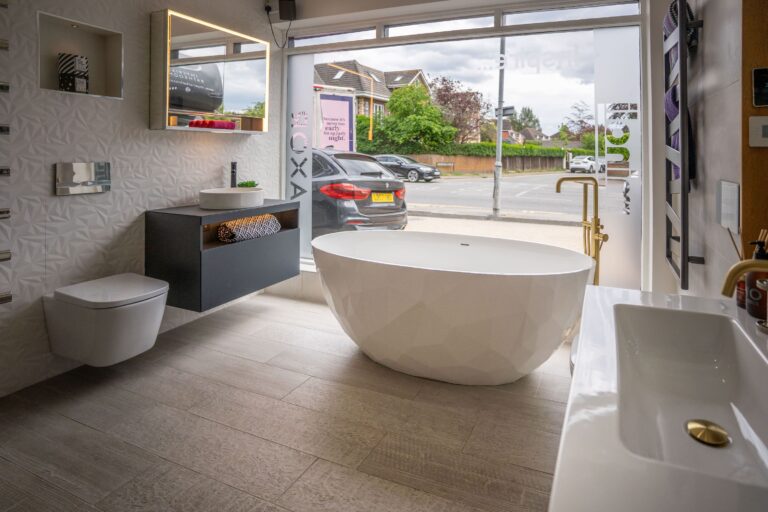
It is easy to fall in love with a look before checking whether it actually suits the room. A freestanding bath photographs beautifully but can be impractical in a small space where it blocks the door swing or leaves nowhere to store towels within reach. A design that has been checked by someone who actually installs bathrooms, not just someone who draws them, tends to avoid these problems before they become expensive to fix.
Mistake 4: Underestimating the timeline
An average bathroom takes around 3 weeks to install once work begins, but that is only part of the timeline. Furniture and brassware can take 6 to 8 weeks to manufacture, and a fully project managed installation is often booked 3 to 4 months in advance. Building in this lead time from the start avoids the common mistake of setting a moving-in date, or a family event, around a bathroom that simply is not ready.
Mistake 5: Buying products before they have been checked together
A tap that looks right on a screen might not work with your boiler. A vanity unit that fits on paper can cause problems once the pipework behind it is factored in. These are small mistakes with expensive consequences, and they happen most often when products are bought individually online before anyone has looked at how they will work together in your specific bathroom. A short conversation before you buy, even if you already know roughly what you want, catches these issues while they still cost nothing to fix.
Mistake 6: Skipping the design stage to save time
It is tempting to jump straight from measurements to ordering, especially when a project feels overdue. But the design stage, using proper CAD software to work through the layout before anything is bought, is where genuine problems get caught. Skipping it does not usually save time overall. It just moves the problem later in the project, when it is far more disruptive and expensive to solve.
If you are planning a bathroom project and want to avoid these pitfalls from the outset, download the Imperial Bathrooms brochure or book a design appointment at the Windsor showroom to talk through your project properly before anything is ordered.
FAQs
Ask for an itemised quote that states clearly whether waste removal, minor plumbing changes, making good and VAT are included. Ask directly what circumstances could change the price once work begins.
Products that look right individually do not always work together in practice, such as a tap that is not compatible with your boiler or a vanity unit that does not allow for existing pipework. A short conversation before buying catches these issues while they are still cheap to fix.
For a fully project managed installation, it is sensible to plan 3 to 4 months ahead, since good installers are usually booked up in advance. Furniture and brassware can also take 6 to 8 weeks to manufacture, so ordering early avoids delays.
Ideally, the person managing your project from the initial consultation through to handover should be involved throughout, not just at the point of sale. Ask specifically who will be available to answer questions once installation begins.
Yes. A supply-only service still includes proper design and specification advice, it simply means you arrange your own installer to carry out the fitting.